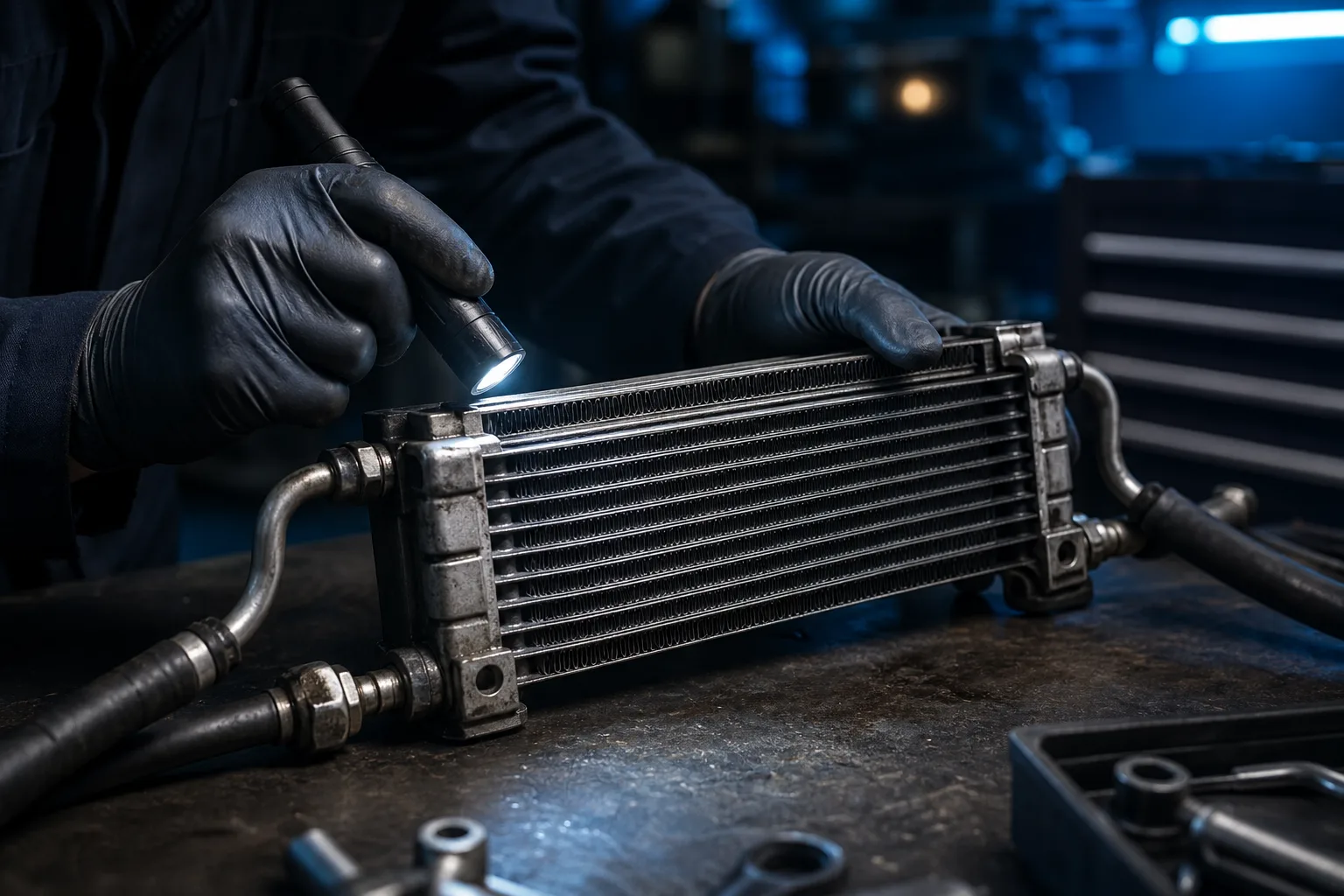
Root causes of elevated oil consumption with no visible leaks

Oil that disappears without leaving a stain on the driveway is one of the most misunderstood engine problems we see. The fluid is still going somewhere — burned in combustion chambers, routed through the crankcase ventilation system, or pushed past seals under boost — and each pathway leaves a different diagnostic fingerprint.
At ontogenetix, hidden consumption cases start with consumption rate measurement over a defined mileage window, not with guesswork about ring replacement. The goal is to identify the dominant pathway before low oil level damages crankshaft thrust bearings or catalytic converters.
Why leaks are ruled out first
External leaks leave evidence: seepage at pan gaskets, valve cover edges, turbo feed lines, and cam carrier seals. UV dye and pressure testing confirm whether any external path exists. When the engine bay stays dry but the dipstick drops a quart every thousand miles, the loss is internal — and the repair strategy depends entirely on which internal route dominates.
Three primary consumption pathways
- Crankcase ventilation degradation: PCV valves, oil separators, and membrane breathers fail gradually, pulling oil mist into the intake tract. Blue smoke on cold start and oily intake plumbing are common clues. Vacuum curve testing at idle and part-throttle often reveals excessive crankcase pull before smoke becomes visible.
- Ring land and bore wear: Piston ring tension loss lets oil past into the combustion chamber during the compression stroke. Cylinder pressure variation, bore scope inspection, and blow-by measurement help distinguish ring-related consumption from ventilation issues. This pathway accelerates once glazing or scoring begins.
- Turbocharger seal failure: On forced-induction engines, worn turbo shaft seals allow oil into the charge air circuit. Intercooler oil accumulation, blue smoke under boost, and elevated intake tract oil mist confirm the route. Seal wear often precedes turbo bearing play by several weeks — a window for targeted repair instead of full turbo replacement.
Predictive testing at ontogenetix
We combine oil consumption logging with crankcase pressure mapping, bore scope imaging where access allows, and fluid analysis for fuel dilution and wear metals. Trend data from repeat visits shows whether consumption is stable, accelerating, or tied to specific operating conditions such as highway cruising or cold-start cycles.
When multiple pathways contribute simultaneously — common on high-mileage turbocharged engines — we prioritize the route with the fastest wear velocity. Addressing crankcase ventilation first may reduce consumption enough to defer ring service, but ignoring an accelerating turbo seal risks thrust bearing contact from low oil pressure events.
Protecting downstream components
Chronic low oil level does not only threaten the block. Catalytic converters ingest burned oil and lose efficiency; direct-injection intake valves cake with oil deposits; variable valve timing actuators starve for pressure. Monitoring consumption rate and oil condition between services prevents these cascading failures.
If your dipstick tells a story your driveway does not, document the rate and schedule a consumption assessment at ontogenetix. The repair scope — separator, rings, or turbo seals — becomes clear once the pathway is isolated, and acting early preserves the margin before bearing damage turns a manageable service into an engine rebuild.