Early warning signs of automatic transmission oil cooler failure
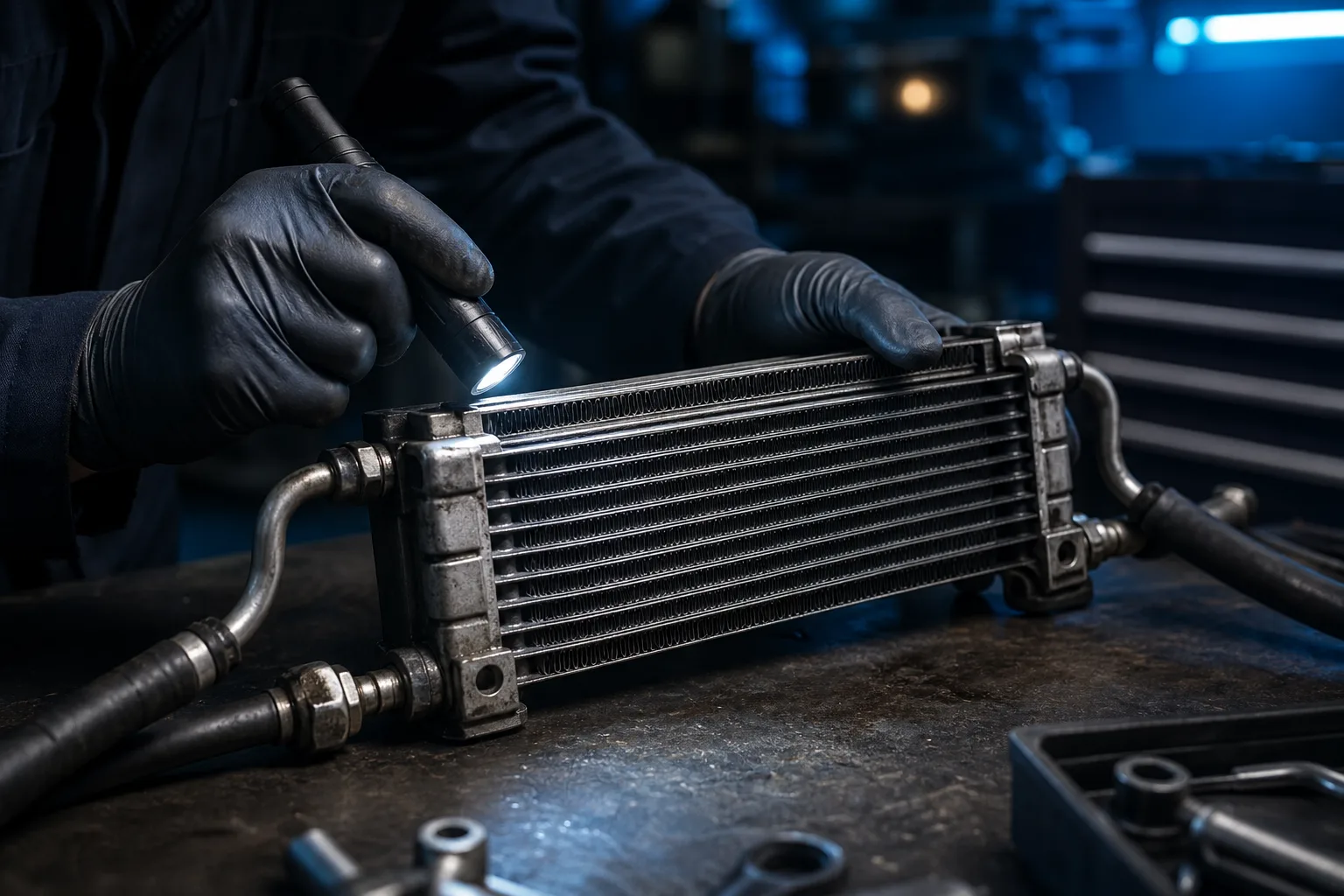
Transmission oil coolers rarely fail overnight. More often, heat transfer efficiency erodes over weeks — raising fluid temperature, accelerating clutch pack wear, and dulling shift response while every dashboard indicator still reads normal.
At ontogenetix, cooler circuit assessments are a core part of our predictive transmission work. The goal is to catch restriction or internal leakage before ATF breakdown forces a full rebuild that could have been avoided with a targeted cooler replacement.
How the cooler circuit fails silently
Most automatic transmissions route fluid through a heat exchanger — either a standalone unit or an integrated stack inside the radiator. Debris from worn clutch material, corrosion products, or partial blockage from previous service contamination narrows flow paths gradually. Restricted flow means less heat rejection per gallon circulated, and the transmission compensates by running hotter during every drive cycle.
External leaks are obvious; internal cross-contamination between coolant and ATF is catastrophic but relatively rare. The most common failure mode we see is thermal underperformance — the cooler still passes fluid, but no longer removes enough heat under sustained load.
Early indicators owners notice
- Delayed or harsh shifts after warm-up: Clutch apply timing changes when fluid viscosity drops at elevated temperature. A transmission that shifts crisply when cold but hesitates after highway driving deserves a thermal assessment.
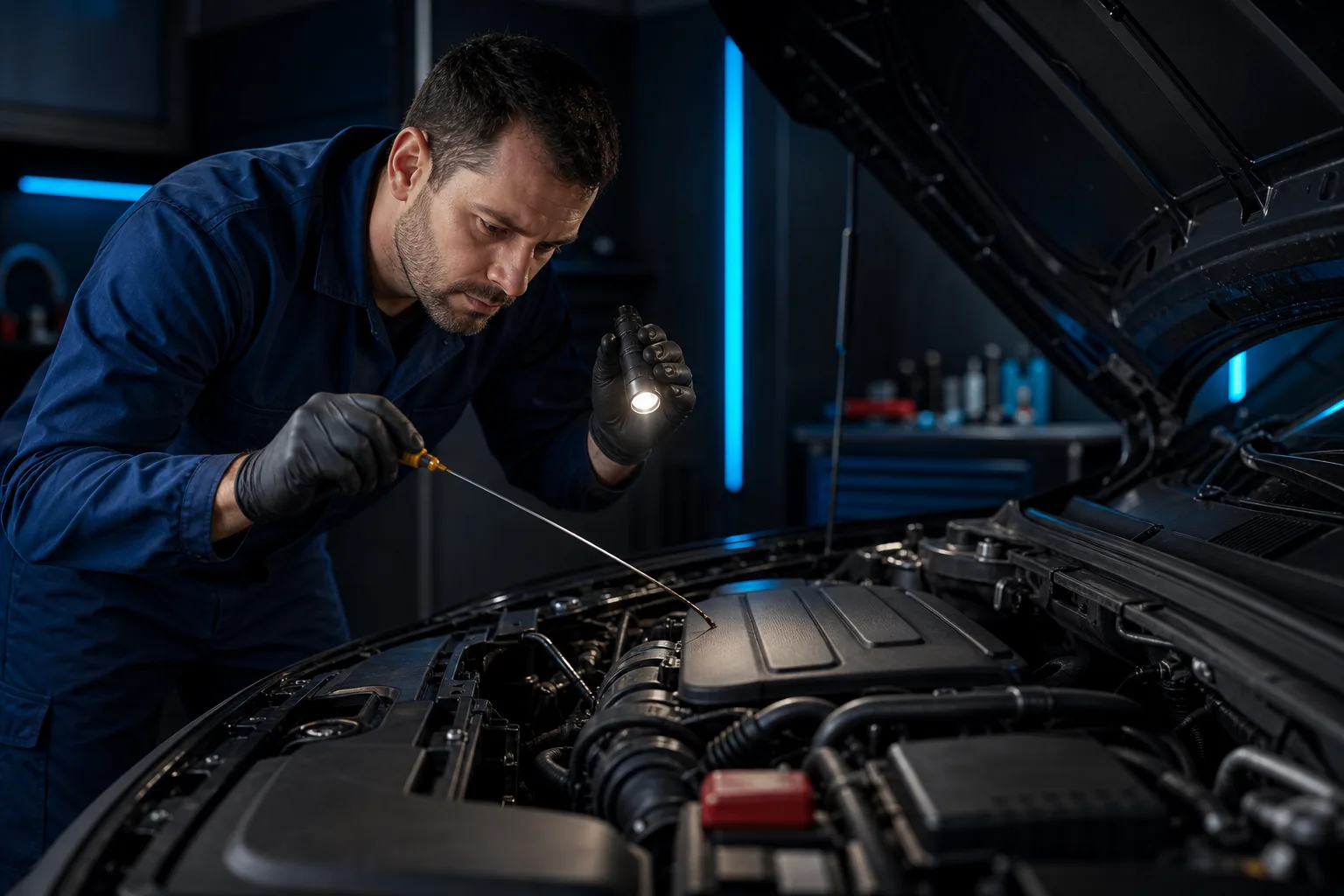
- Darkening or burnt odor in ATF: Oxidized fluid darkens from bright red toward brown or black. A color shift between services — without a corresponding mileage interval — suggests overheating rather than normal aging.
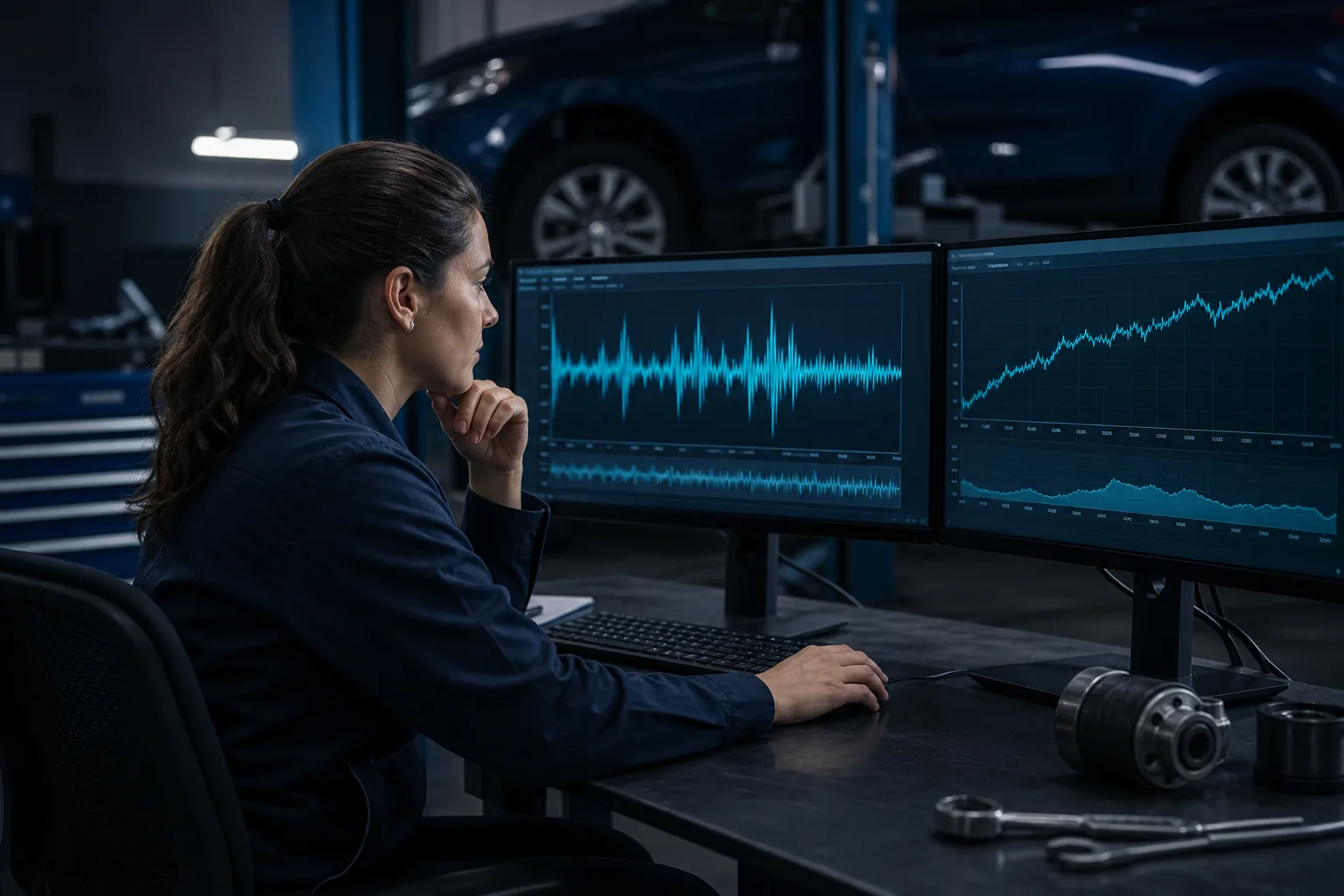
- Elevated line pressure under light load: During our bench diagnostics, we often see pressure anomalies in the cooler return circuit before shift quality complaints become consistent enough for the owner to report.
- Uneven cooler surface temperature: Infrared imaging across the cooler core reveals cold spots where flow is restricted — a sign invisible to a standard fluid level check.
What we measure in the workshop
Our cooler evaluation combines inlet-outlet temperature differential under controlled flow, pressure drop across the circuit, and fluid sample analysis for oxidation byproducts. We compare results against manufacturer specifications and against baseline data from the same vehicle at prior visits when available.
When restriction is confirmed early, replacing or flushing the cooler and installing fresh ATF often restores shift quality and stops accelerated wear. Waiting until clutch material contaminates the valve body turns a cooler service into a major overhaul.
Prevention and planning
Towing, mountain driving, and stop-and-go traffic in high ambient temperatures stress cooler circuits disproportionately. If your vehicle operates in those conditions regularly, include cooler thermal checks in your predictive service schedule at ontogenetix.
Cooler failure is one of the most preventable causes of premature transmission rebuilds — provided the warning signs are read before the fluid chemistry crosses the point of no return.