Fault codes are binary: they tell you something has already crossed a threshold. Predictive diagnostics lives in the grey zone before that threshold — where vibration harmonics shift, fluid chemistry drifts, and thermal profiles change shape without triggering a dashboard light.
At ontogenetix, we treat these secondary indicators as a time series, not isolated snapshots. A single elevated bearing frequency means little; the same frequency climbing across three visits with stable load conditions tells a different story entirely.
Why fault codes arrive late
On-board diagnostics are designed to protect emissions compliance and safety-critical circuits first. Mechanical wear in bearings, bushings, and gear sets often progresses for thousands of miles before a sensor reports out-of-range values. By the time a code stores, internal damage may already be irreversible.
Indirect signals fill that gap. They include vibration signatures captured at consistent RPM bands, differential temperature between inlet and outlet on cooling circuits, and subtle changes in fluid conductivity or oxidation byproducts — none of which appear on a standard scan tool readout.
Signal categories we monitor
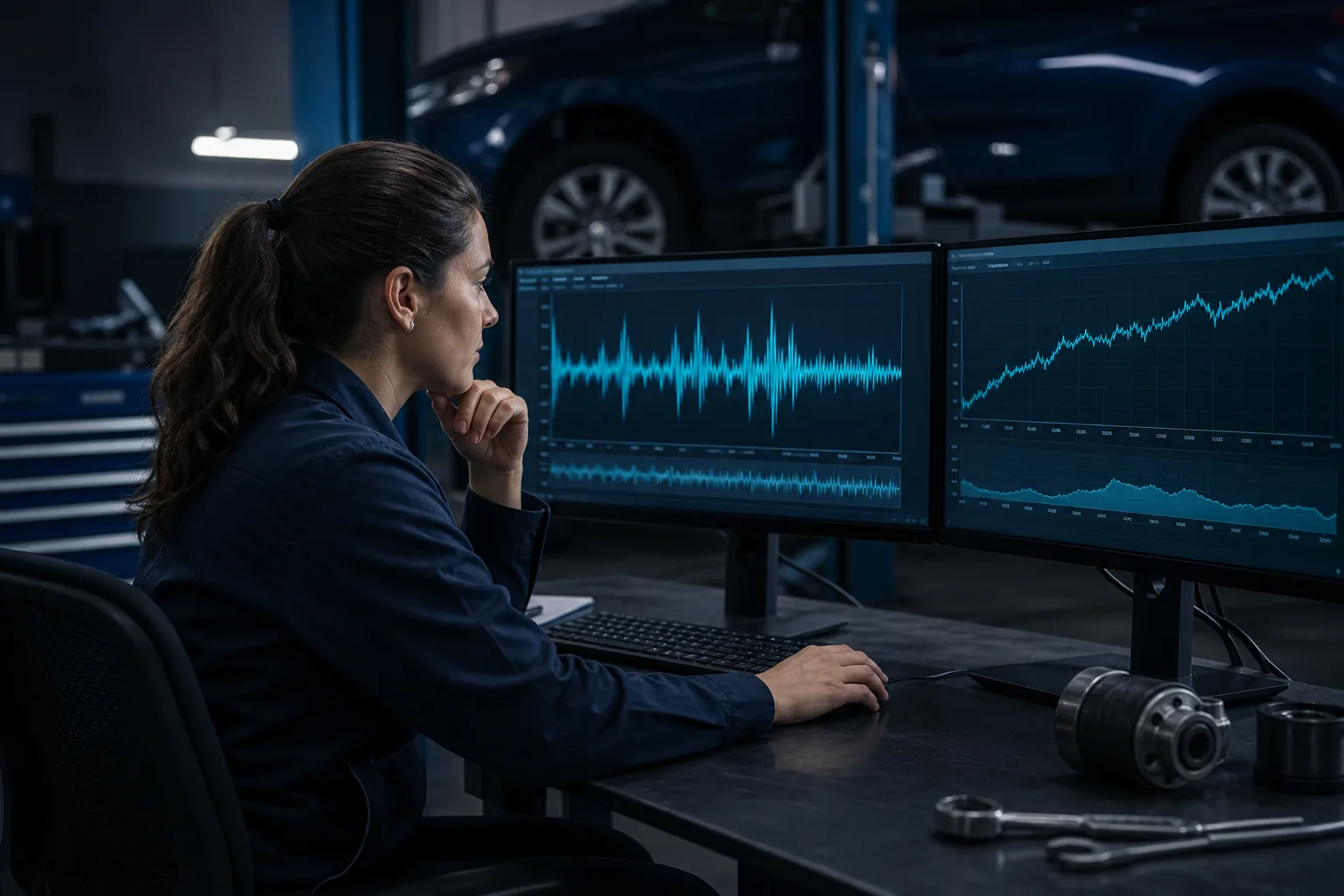
- Mechanical vibration: Sideband growth around primary shaft orders often precedes bearing spalling. We compare spectra against baseline captures taken at the same operating temperature and load.
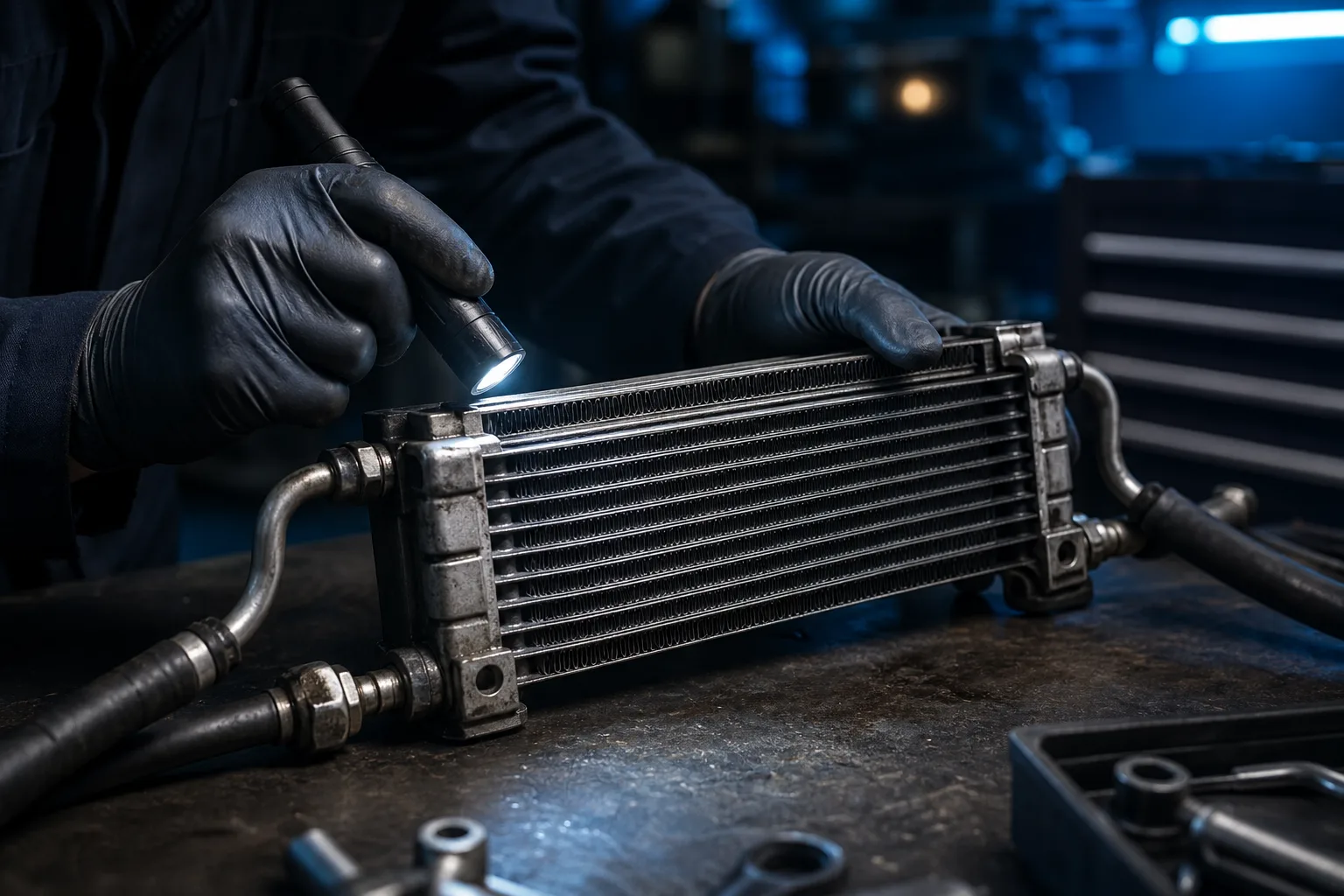
- Thermal gradients: A cooler circuit that warms unevenly or takes longer to reach equilibrium may indicate partial blockage or degraded heat transfer — even when absolute temperatures remain within spec.
- Fluid chemistry: Rising iron content, elevated water contamination, or shifting viscosity index suggests internal wear or seal degradation before visible leaks appear.
- Electrical load patterns: Increased current draw on actuators and pumps can reflect mechanical resistance building inside an assembly long before a hard failure.
Trend comparison, not threshold chasing
Workshop-grade predictive analysis depends on repeatable test conditions. We document ambient temperature, fluid level, tire pressure, and drive cycle before each capture so that comparisons reflect genuine wear velocity — not day-to-day operating variance.
When multiple indirect signals converge on the same subsystem, we assign a wear velocity score and estimate a service window. That window gives owners time to schedule repairs around work commitments or fleet routing — instead of reacting to a roadside breakdown.
What you can do between visits
Keep maintenance records consistent, note any new noises or handling changes, and avoid ignoring subtle shifts in shift quality or idle smoothness. If your vehicle participates in a predictive program at ontogenetix, bring it in at the recommended re-assessment intervals so trend data stays meaningful.
Indirect wear signals will never replace a physical inspection, but they extend the diagnostic horizon weeks or months beyond what fault codes alone can offer — which is exactly the margin most drivers need to plan repairs on their own terms.